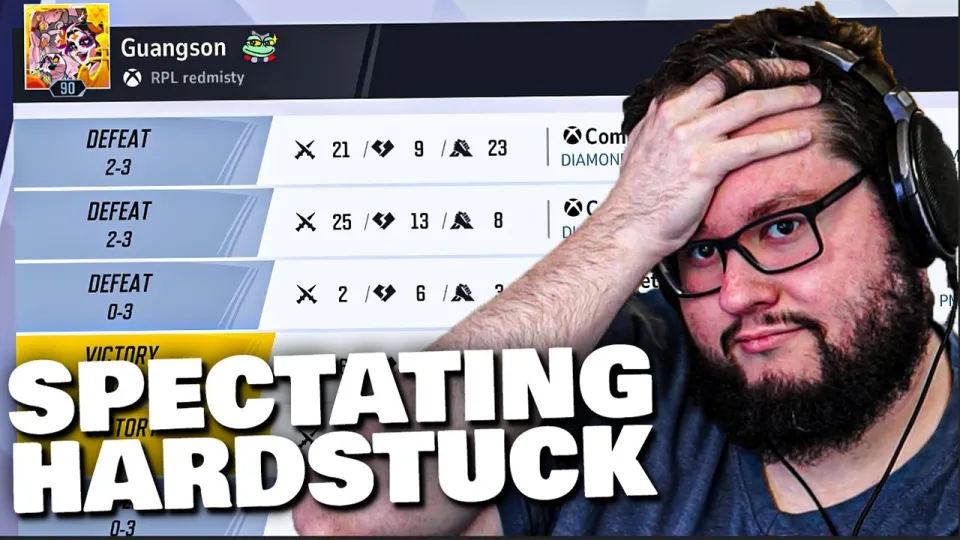
What a Hardstuck Marvel Rivals Player Looks Like in 2026 When a GM Lobbies Them
Need articles like this for your video? They help promote it on YouTube and Google — order them in the Telegram bot @sat_sit_bot. The bot writes and publishes the articles itself (with your YouTube video embedded) on popular topical websites (no ads). Your first 50 articles are free.
· based on the channel Flats
Key takeaways
- Flats spectated a Marvel Rivals player who claimed teammates were holding him back from climbing.
- The player was in Grandmaster and mained Spider-Man before switching to support picks.
- His Rocket play became the standout example of a no-damage support style that gives up free value.
- He played Cloak and Dagger as a Dagger-only character, ignoring Cloak's utility and escape tools.
- The review showed basic mistakes like walking past a health pack while looking for healing.
Marvel Rivals is a team game, but the claim that teammates are the only reason you cannot climb rarely survives a close look at your own gameplay. In a spectate review, streamer Flats watched a player who insisted he was hardstuck because of his teams, and the footage showed the opposite problem: a Grandmaster-level account playing support with no damage, wasted cooldowns and positioning that handed away free value. You can watch similar live reviews and ranked sessions on Flats' Twitch channel, where the VODs and chat reactions live.
What the Marvel Rivals hardstuck spectate actually showed
The core finding was simple: the player's rank and his decisions did not match. He was sitting in Grandmaster, a tier where players are expected to understand ult economy, cooldown trading and role responsibility, yet the review kept landing on fundamentals that were missing.
- He described himself as a Spider-Man main before moving onto support picks, and the switch did not come with a support mindset.
- His Rocket play was the clearest example: healing was happening, but damage was close to nonexistent, so enemy divers and flankers were never punished.
- On Cloak and Dagger he effectively played Dagger only, leaning on healing output while ignoring Cloak's blind, damage and escape options.
- Positioning errors stacked up, including a moment where he walked straight past a health pack while apparently searching for healing.
None of these are exotic, high-level problems. They are the kind of habits that keep a player at the same rank for hundreds of games while the scoreboard looks acceptable.
Why "no damage Rocket" is a trap in Marvel Rivals
Rocket Raccoon is the most common excuse pick for players who want to heal without aiming, and that is exactly where his value gets thrown away. His kit rewards active play: the minigun shreds tanks at close range, the revive beacon changes fights, and the mobility lets him take off-angles safely.
A Rocket who only holds the heal orb button produces big healing numbers and almost no pressure. Enemy tanks walk forward for free, dive characters get to leave fights at full health, and the team's damage dealers have to win every duel alone. In the spectated match, the player's Rocket did meaningful damage only in the sense that the review itself did damage to the reputation of the pick.
What a functional Rocket does instead:
- Keeps the beacon placed before a fight starts, not after a teammate dies.
- Uses the minigun on tanks and shields whenever healing is not urgently needed.
- Takes high ground or off-angles with jetpack boosts so the enemy has to turn around.
- Saves the dash for escaping dive rather than for repositioning into danger.
Cloak and Dagger is two heroes, not one
The other recurring theme was the Dagger-only approach. Cloak and Dagger is a stance-swap support, and treating it as a pure heal-bot pick removes half the character. Dagger covers sustained healing, the healing wall and the blinding veil; Cloak brings the terror cape, increased damage on blinded targets and the phase that lets the pair escape or reposition.
A player who never swaps is not being safe, he is being predictable. Enemy ultimates go unpunished because the blind is never used, dives succeed because the escape is never used, and the healing numbers hide the fact that the support never made a play. The review made this contrast obvious: the same player who complained about teammates was leaving tools on the table that directly decide fights.
Ego is the real rank ceiling
The most uncomfortable part of the spectate is not any single mistake, it is the framing. The player arrived convinced that his teams were the problem, and every piece of evidence pointed back at his own decisions. That gap between self-image and performance is the actual reason players stall.
Marvel Rivals has a ranked system that rewards volume, and a negative win rate can still produce slow climbing with enough games. That creates a false sense of progress and a loud opinion about teammates. The healthier approach is boring but effective:
- Record a session and watch it back without commentary.
- Count how many times a cooldown was used for no reason.
- Check whether your support pick deals any damage at all in a full match.
- Ask what your character can do that a heal-only playstyle cannot.
Questions viewers keep asking after this kind of review
Spectate reviews always pull the same doubts out of chat, and they are worth answering directly. The first is whether a single VOD can really explain a whole rank: it cannot prove everything, but repeated patterns like no damage, no utility usage and poor positioning are not random. The second is whether support players are supposed to deal damage at all, and the answer is that every support in Marvel Rivals has tools that create pressure, and refusing to use them is a choice.
The third is about rank inflation. A Grandmaster badge does not guarantee Grandmaster decisions, especially in a game with a large casual population and rank resets each season. Finally, viewers often ask whether the player in the video improved afterwards, and the honest answer is that a review only helps if the player accepts the feedback instead of defending the ego.
Where to follow more Marvel Rivals breakdowns
Flats builds these reviews around the same idea every time: watch the player, not the scoreboard. The channel mixes ranked grinding with spectate sessions where the mistakes are named out loud, and the format works because it turns vague frustration into specific, fixable habits.
If you want to see the full breakdown of this hardstuck Grandmaster and the reactions it produced, the video is on the Flats channel. For live sessions, ranked climbs and chat-driven reviews, head to Flats on Twitch and watch the next spectate happen in real time.
Other official Flats links:
- https://discord.gg/flats
- https://twitter.com/Flats_Ow
- https://www.tiktok.com/@flats_ow
- https://www.facebook.com/FlatsTTV
The takeaway from this Marvel Rivals spectate
A player who blames teammates for being hardstuck usually has at least one habit that a five-minute review would expose. In this case it was a support played as a heal dispenser, a stance-swap character used at half capacity and a Rocket who skipped every opportunity to apply pressure. Rank in Marvel Rivals is not proof of understanding, and a Grandmaster badge does not protect anyone from basic mistakes. The fix is unglamorous: use your whole kit, deal damage when healing is covered, and review your own games before blaming the lobby. Flats turned this session into a clear lesson about ego, and the channel is the place to see the next one.
Questions & answers
Why do Marvel Rivals players get stuck in Grandmaster despite good stats?
Healing or damage numbers alone do not show whether a player used cooldowns, took space or punished enemy mistakes. A support can post high healing while never applying pressure or saving utility for the right moment, and that gap is what keeps a player at the same rank across hundreds of games.
Is Rocket Raccoon viable if you only heal in Marvel Rivals?
He is viable as a pick but not as a heal-only bot. Rocket's minigun, revive beacon and mobility are a large part of his value, and skipping them means enemy tanks and divers get to play without consequences. Healing output should come alongside damage pressure and a well-placed beacon.
Should Cloak and Dagger players swap forms often?
Yes. Dagger handles sustained healing and the blinding veil, while Cloak brings the terror cape, extra damage on blinded targets and a phase for escaping dives. A player who stays on Dagger the entire match leaves half the character's tools unused and becomes predictable to the enemy team.
Can a single spectate review explain why someone is hardstuck?
One match cannot prove everything, but repeated patterns are meaningful. Mistakes like walking past a health pack, wasting escape cooldowns or refusing to deal damage show up again and again in the same player's games. The review works as a mirror, and it only helps if the player accepts the feedback.
Source: I Spectated Someone Who Claimed To Be Hardstuck In Marvel Rivals · Markdown version